
Wisdom teeth have a reputation for causing trouble, but they do not create problems for everyone. Some grow into a healthy position and remain easy to clean. Others stay trapped beneath the gums, emerge at an angle, or leave too little room for effective brushing and flossing.
If you are concerned about wisdom teeth in Orange, CA, a dental evaluation can provide clarity. An exam and appropriate imaging allow a dentist to see how the teeth are positioned, check the surrounding tissues, and recommend monitoring or treatment based on your individual needs.
This article provides general education and is not a diagnosis or substitute for care from a dentist or oral surgeon. Seek professional advice for symptoms, treatment decisions, medication use, costs, and recovery concerns.
What Are Wisdom Teeth?
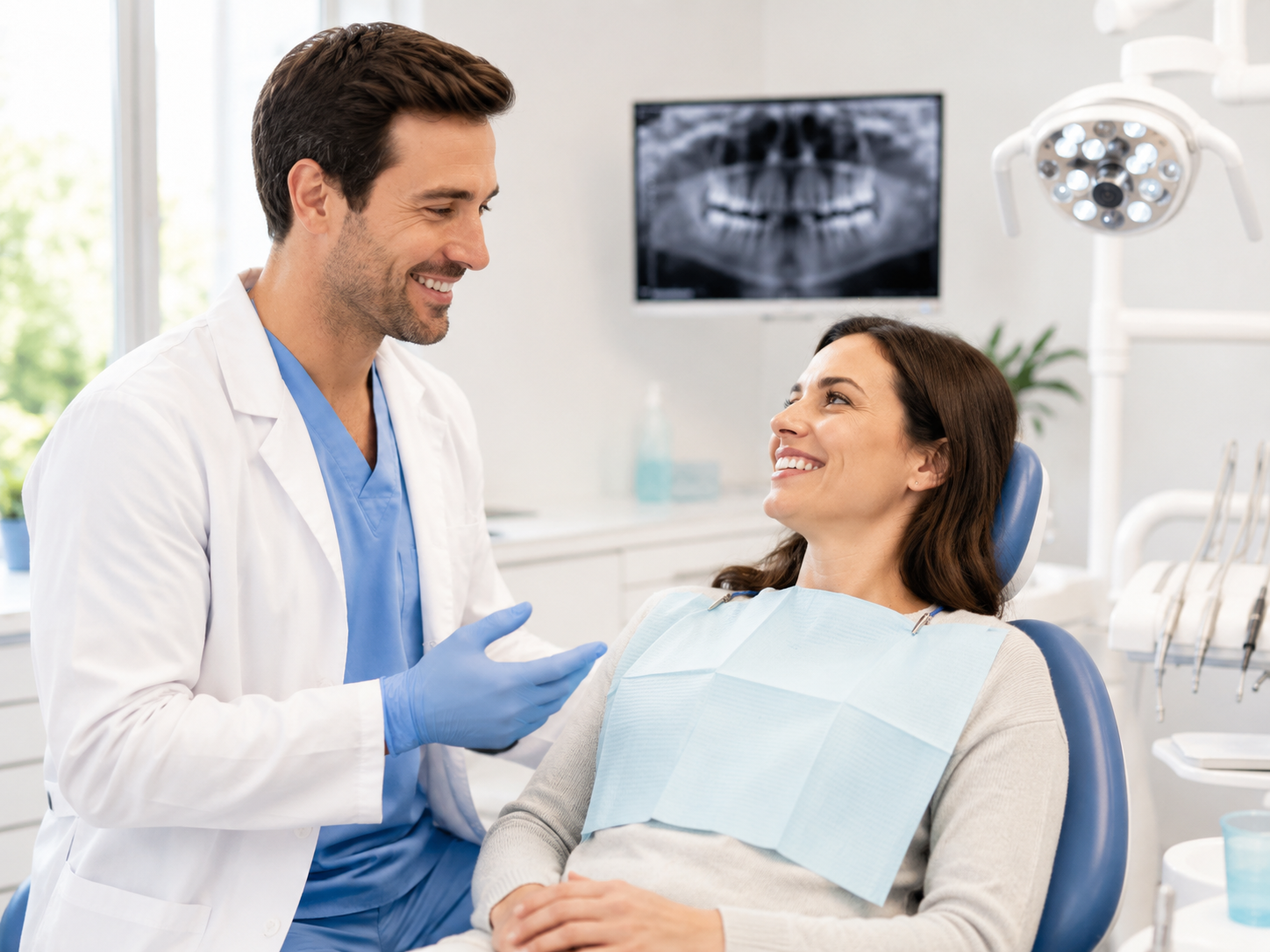
Wisdom teeth are the third and final set of permanent molars. They develop at the very back of the upper and lower jaws. Because they appear later than the other permanent teeth, there may not be enough space for them to enter the mouth normally.
A wisdom tooth may be:
- Fully erupted: The entire crown has emerged through the gums.
- Partially erupted: Part of the tooth remains covered by gum tissue.
- Impacted: The tooth is trapped beneath gum tissue, bone, or both.
- Angled: The tooth points toward a neighboring molar, the back of the jaw, or another direction.
Position alone does not determine whether removal is necessary. A dentist also considers symptoms, cleanliness, gum health, decay, the condition of nearby teeth, and what dental imaging shows. The American Dental Association advises regular dental monitoring because wisdom teeth do not develop on the same schedule for every patient.
Signs a Wisdom Tooth May Need Attention
Wisdom tooth problems can develop gradually or become noticeable over a short period. A person may experience discomfort even when the tooth is not fully visible.
Common reasons to schedule an evaluation include:
- Pain or pressure near the back of the jaw
- Red, swollen, or tender gum tissue behind the last molar
- Difficulty opening the mouth comfortably
- An unpleasant taste or persistent bad breath
- Food repeatedly becoming trapped around a partially erupted tooth
- Discomfort when chewing
- Swelling around the jaw or cheek
- New sensitivity or damage near the neighboring molar
These symptoms can have several causes, so they do not automatically mean a wisdom tooth must be removed. A dentist needs to identify the source before recommending treatment.
When should someone seek prompt care?
Contact a dental professional promptly for increasing facial swelling, fever, pus or drainage, severe pain, trouble swallowing, uncontrolled bleeding, or difficulty breathing. Breathing or swallowing difficulty can require urgent medical attention.
Does Every Wisdom Tooth Need to Be Removed?
No. A wisdom tooth that is healthy, properly positioned, functional, and easy to clean may only need routine monitoring. Regular examinations help a dentist watch for changes that may not yet cause pain.
Removal may be discussed when a wisdom tooth is associated with infection, recurring inflammation, decay, gum problems, damage to a neighboring tooth, or another clinically significant concern. A dentist may also recommend treatment when the tooth’s position makes predictable cleaning especially difficult.
The decision is personal rather than automatic. The dentist considers the benefits and risks of treatment, the complexity of the tooth’s position, the patient’s health history, and whether continued observation is reasonable.
How Dentists Evaluate Wisdom Teeth
An evaluation usually begins with a conversation about symptoms and health history. Patients should share information about prescription medications, over-the-counter products, supplements, allergies, previous reactions to anesthesia, and relevant medical conditions.
The dentist then examines the gums, visible teeth, bite, and jaw. Dental imaging may be recommended to determine whether the wisdom teeth are fully erupted or impacted and to evaluate their relationship to nearby structures.
After reviewing the findings, the dentist can explain whether the teeth appear healthy, should be monitored, or may benefit from removal. More complex cases may require care from an oral surgeon. Asking why treatment is recommended, what alternatives exist, and what recovery may involve can help patients make informed decisions.
What Happens During Wisdom Tooth Removal?
Orange Premier Dental provides wisdom tooth extraction evaluations and treatment for appropriate cases in Orange, CA. The specific procedure depends on whether the tooth is fully visible, partially covered, or enclosed by gum tissue or bone.
Before treatment, the dental team reviews the plan and discusses comfort options appropriate for the patient’s needs and medical history. The area is numbed before the tooth is removed. A fully erupted tooth may be loosened and lifted from its socket. An impacted tooth can require a small opening in the gum and careful removal of tissue or bone that blocks access. The tooth may be divided into smaller sections when that allows for a more controlled removal.
The site is cleaned after extraction, and stitches may be used when appropriate. Gauze helps control initial bleeding and supports formation of the protective blood clot. Patients receive instructions tailored to their procedure, medications, and health needs.
Wisdom Teeth Recovery: Understanding the Stages
Recovery does not happen all at once. It helps to separate early symptom improvement from deeper healing:
- Early symptom recovery: Tenderness, minor oozing, jaw stiffness, and swelling can occur after an extraction. These symptoms should generally trend in the right direction rather than become increasingly severe.
- Soft-tissue healing: The gum gradually closes over the extraction area. The opening may remain noticeable even after a patient feels comfortable returning to normal activities.
- Bone healing: The jawbone beneath the gum remodels more slowly than the surface tissue. Feeling better does not mean that deeper healing is complete.
- Completion of care: Wisdom tooth removal does not involve osseointegration or a final restoration unless a separate treatment, such as a dental implant elsewhere, is planned. Completion generally means the dentist is satisfied with healing and no further care is needed.
Recovery varies with the tooth’s position, the number of teeth removed, procedure complexity, and the patient’s overall health. The treating clinician’s instructions should take priority over generalized online timelines.
Ways to support comfortable healing
- Bite on gauze for the period recommended by the dental team.
- Use cold packs only as directed, with a barrier between the pack and skin.
- Choose soft foods and stay hydrated.
- Avoid forceful rinsing, spitting, or disturbing the extraction site early in recovery.
- Do not drink through a straw until the clinician says it is safe.
- Brush carefully and follow the practice’s instructions for cleaning near the site.
- Take medications only as directed by a dentist, surgeon, physician, or the product label.
- Avoid smoking and vaping, which the American Dental Association notes can interfere with healing and increase the risk of complications.
The blood clot covering the socket plays an important protective role. If it is disrupted, a painful condition commonly called dry socket may occur. Patients should call the dental office if pain becomes intense, worsens after initially improving, or is accompanied by a bad taste, odor, fever, or increasing swelling.
How Much Does Wisdom Teeth Removal Cost in Orange, CA?
There is no single fee that applies to every patient. Cost can vary based on how many teeth require removal, whether they are erupted or impacted, procedure complexity, required imaging, comfort or anesthesia needs, insurance benefits, and whether specialist care is appropriate.
A useful estimate should explain what is included, such as the exam, imaging, procedure, follow-up care, and any separate medication or specialist fees. Patients with dental insurance can ask the practice to review estimated benefits, deductibles, annual limits, and expected out-of-pocket costs. An estimate is helpful, but it is not a guarantee of insurance payment.
Frequently Asked Questions About Wisdom Teeth
Can wisdom teeth cause problems without hurting?
Yes. Decay, gum inflammation, or damage near a neighboring tooth may begin without obvious pain. Routine exams and dental imaging can identify concerns that are difficult to see or feel at home.
Can all four wisdom teeth be removed at once?
Sometimes. Whether that approach is appropriate depends on the position of each tooth, overall procedure complexity, the patient’s health, and the clinician’s recommendation. Not every patient has four wisdom teeth, and not every tooth needs treatment.
Is wisdom tooth removal painful?
The area is numbed during the procedure, and additional comfort options may be discussed when appropriate. Soreness afterward is common, but the experience varies. Patients should follow their individualized pain-management instructions and contact the practice if discomfort is severe or worsening.
What can someone eat after an extraction?
Soft, easy-to-chew foods are usually more comfortable at first. Examples include yogurt, applesauce, eggs, mashed vegetables, and lukewarm soup. Avoid very hot, hard, crunchy, or sharp foods until the treating clinician says they are appropriate.
Can someone drive home after treatment?
That depends on the medications or anesthesia used. Some patients need a responsible adult to drive them home and remain available afterward. The dental team should provide transportation instructions before the appointment.
What happens if wisdom teeth are left in place?
Healthy wisdom teeth may remain stable with good hygiene and regular monitoring. Others can develop concerns over time. A dentist can explain the risks and benefits of observation based on the position and health of each tooth.
Schedule a Wisdom Teeth Evaluation in Orange, CA
Wisdom tooth care begins with understanding what is happening beneath the gums. Whether a patient has new discomfort, has been told a tooth is impacted, or simply wants to know whether monitoring is appropriate, a personalized examination can provide answers.
Orange Premier Dental welcomes questions about wisdom teeth and extraction care. To discuss the next step, contact Orange Premier Dental at 1665 E Lincoln Ave, Orange, CA 92865. The team can evaluate the area, explain available options, and help the patient make an informed decision without unnecessary pressure.
Dr. Shierf Elgamal is the lead dentist at Orange Premier Dental in Orange County. A graduate of Loma Linda University School of Dentistry (2013), he has extensive experience across all areas of general dentistry and is dedicated to providing patients with honest, straightforward care. Over the years, Dr. Elgamal has worked in multiple practices, gaining valuable skills that he now brings to his own clinic.